Office painting looks simple until you try to do it around desks, servers, glass conference rooms, and tenants who still expect quiet elevators. For property managers and tenant improvement teams in the DMV, interior office painting succeeds when color, coatings, and schedule are decided together.
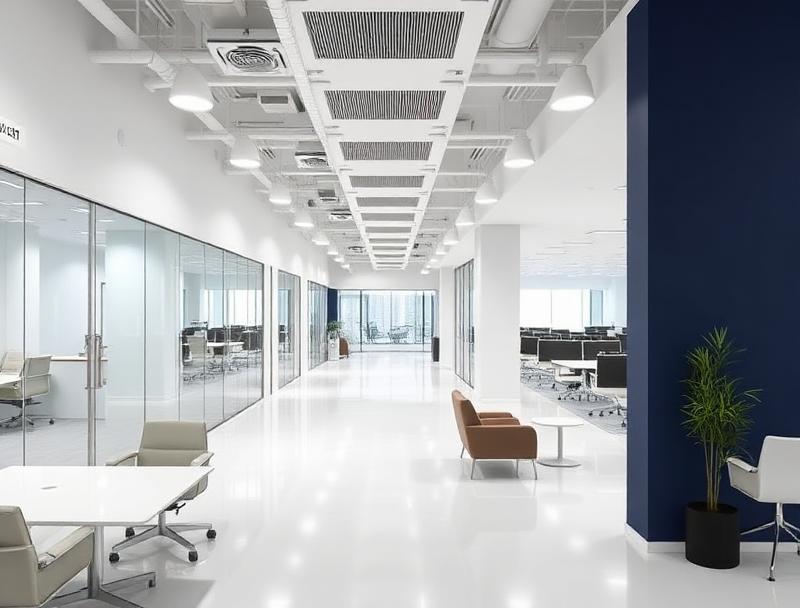
Color strategy that still works in two years
First, choose a small, repeatable palette. This makes repairs and future touch-ups easier for the facility team.
- Use neutral field colors for large open areas
- Reserve accent walls for reception, collaboration zones, or brand moments
- Use higher-contrast doors and frames only where maintenance can keep edges crisp
- Document the formula for every color used on the job
However, trendy saturated walls in busy corridors can become scuff magnets. Save bold color for controlled surfaces.
Key takeaway: Choose colors for maintenance reality, not only the mood board.
2026 office painting color trends worth using carefully
Current commercial forecasts are moving beyond cool gray toward warmer neutrals, softened color, and deeper nature-led accents. The best office painting trend is still one that supports the brand, works under the actual lighting, and can be maintained after move-in.
Trend filter: Before approving a color, test it against three realities—brand standards, daylight and adjacent materials, and the facility team’s touch-up plan.
Explore the official Sherwin-Williams 2026 commercial forecast and PPG’s 2026 color trends, then validate final samples in the actual office.
Office painting coatings and sheens by zone
Match each finish to how the space is used, touched, and cleaned. Swipe the image panel or choose a zone below. Final product selection should still reflect substrate condition and the manufacturer’s current application guidance.

Office painting for open-plan walls
A durable eggshell or comparable cleanable finish balances low glare with routine wipeability across large wall fields.
Design note: For example, warm neutral fields help daylight travel and keep future touch-ups predictable.

Office painting for break rooms and copy areas
Prioritize scrub resistance and cleanability where repeated contact, splashes, carts, and maintenance cycles are expected.
Design note: Meanwhile, coordinate the wall finish with cabinetry, counters, and backsplash materials before approving color.

Office painting for doors and trim
A specified durable enamel—often in a restrained semi-gloss—helps resist hand contact and supports detailed cleaning.
Design note: In addition, crisp color contrast can improve wayfinding, but every edge must stay easy to maintain.

Office painting for ceilings and soffits
Flat or matte systems minimize reflected glare. Confirm compatibility with existing acoustic grid, tile, drywall, and textured surfaces.
Design note: Finally, use sheen and color to unify mixed ceiling materials without drawing attention to surface variation.
Swipe, scroll, or choose a zone. One image and recommendation stays in view at a time.
For occupied spaces, pair product selection with ventilation and label guidance. See the EPA overview of VOCs and indoor air quality.
Scheduling options tenants can tolerate
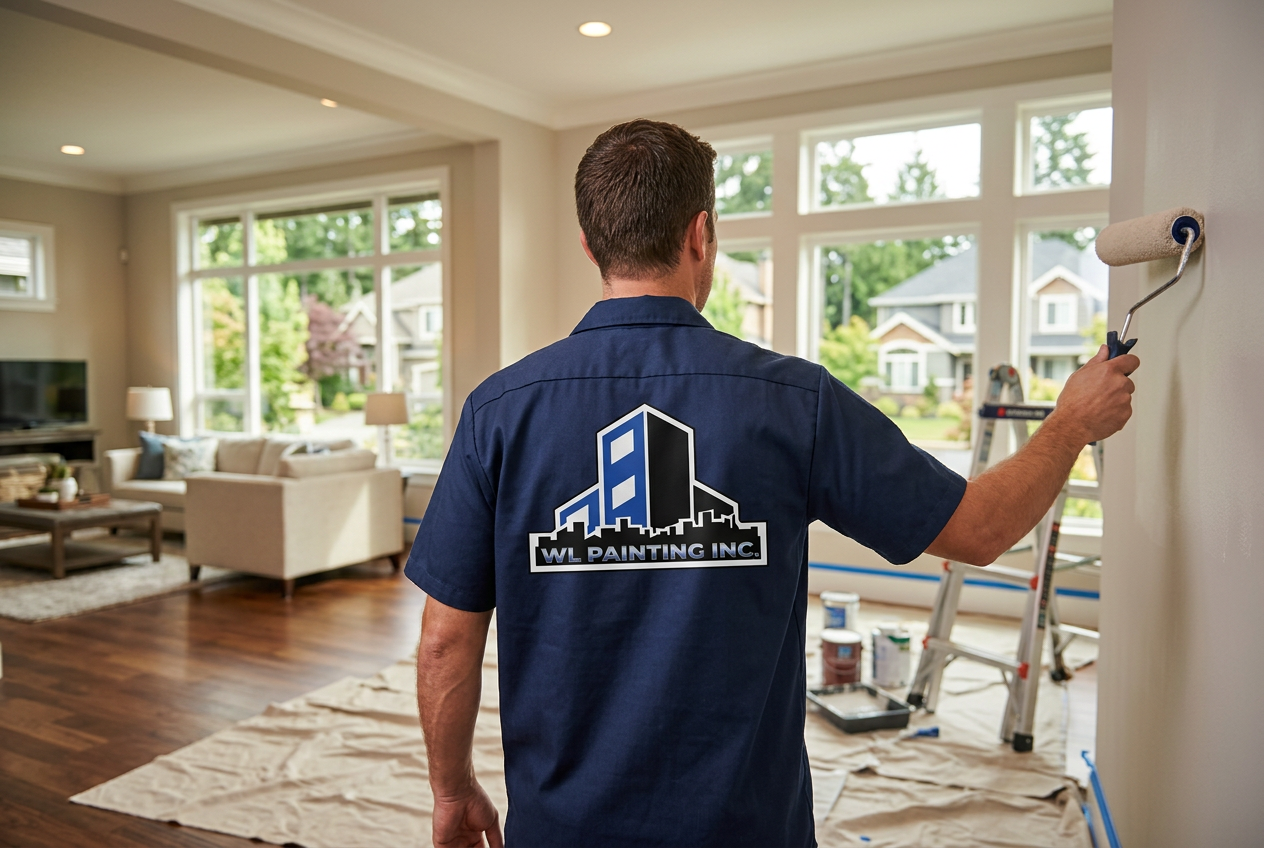
- Nights and weekends: useful for occupied suites
- Floor-by-floor phasing: practical for multi-tenant buildings
- Swing-space approach: temporarily move teams for faster full recoats
In addition, plan office painting work zones several days ahead whenever possible. A defined daily reset helps tenants return to a clean, usable floor.
TI and punch-list coordination
Finally, remember that office painting often sits on the critical path before flooring finishes, furniture installation, and AV. Therefore, sequence final coats after the messiest trades when practical. Otherwise, budget intentional touch-up days. A beautiful first coat means little if four trades damage it before the certificate of occupancy.
For a smoother handoff, define the inspection standard, authorized decision-maker, and punch-list process before the final walkthrough. Our commercial painting FAQ answers related questions about occupied work, preparation, changes, and closeout.
Color decisions that reduce future cost
- Use one primary wall color per floorplate when possible
- Limit accent colors to reception and branded collaboration zones
- Standardize door and frame colors across the suite
- Store formulas with property management, not only the painter
Maintenance reality: Every extra unique color becomes another touch-up product the facility team must identify and match later.
Frequently asked questions
How long does a typical office suite repaint take?
Small suites can finish in a few nights. Full floors may take a week or more. Repairs, access, crew sequencing, drying time, and occupancy constraints all affect the schedule.
Should ceilings always be painted?
Not always. Paint ceilings when they are stained, uneven, or part of the refresh. Otherwise, walls and doors may provide more visible impact for the available budget.
Can we paint over light wallcovering texture?
Sometimes, after the material, seams, adhesion, and substrate have been evaluated. However, severe texture, failing adhesive, or moisture-related conditions usually require a different preparation or removal plan.
Ready to scope your office painting project?
WL Painting Inc works with property managers, facility teams, and general contractors on commercial interiors, wallcovering, surface preparation, and phased occupied-building work.