Commercial tenant improvement painting · DMV
When an office buildout is measured in handoffs, painting can either protect the schedule or create the callback list. WL Painting Inc coordinates commercial TI painting for GCs, tenant representatives, and property teams across Maryland, Washington, D.C., and Northern Virginia—from surface preparation and coatings through touch-up and closeout.
Send plans, a finish schedule, photos, or just the location and timing. We’ll follow up within one business day.
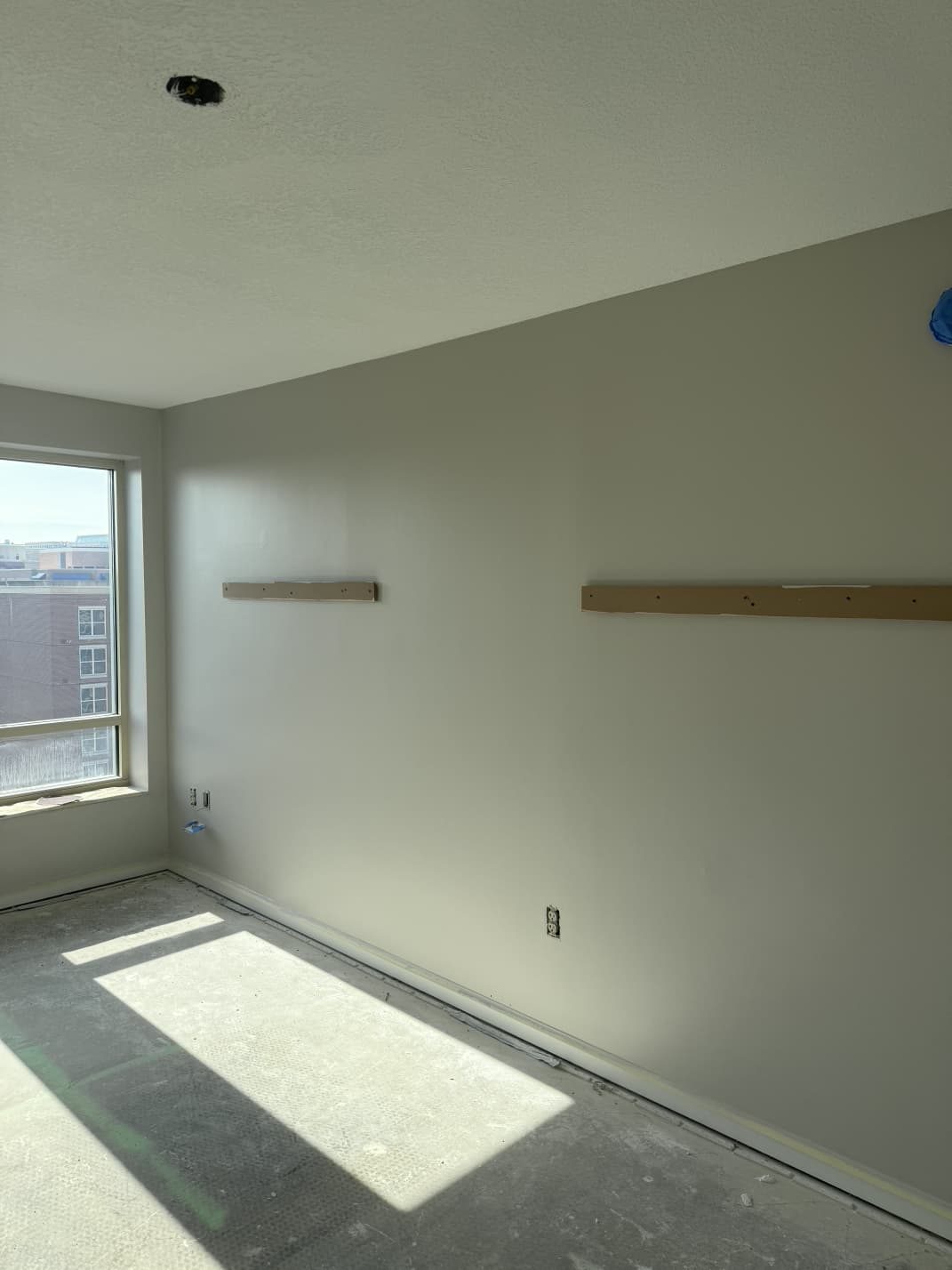
Schedule protection starts with a defined handoff. The paint scope should tell the GC and other trades what is ready, what is protected, what is included, and what needs a deliberate touch-up window.
Commercial readiness assessment
Is your TI painting scope ready to price?
Use this six-point check before you send an office buildout to a painting contractor. Clear inputs reduce clarifications and make bids easier to compare.
- Project location and building type
- Occupied, adjacent-to-occupied, or vacant conditions
- Surfaces, rooms, ceilings, doors, frames, and repair needs
- Finish schedule, color codes, sheens, and approved products
- Trade sequence, access limits, protection, and work-hour requirements
- Target start date, substantial completion, and move-in milestone
No drawings yet? A few photos, the address, and the schedule are enough to start a conversation.
Where painting protects the buildout schedule
Office buildout painting is a finish trade, but the finish sits between several other handoffs. These are the three places where a deliberate scope creates the most downstream value.
Sequence around drywall and other trades
Confirm when walls are closed, tape and finish are accepted, and dust-producing work is complete before the prime and finish coats begin.
Define the finish schedule early
Room colors, sheens, accents, ceilings, doors, frames, and product requirements should be visible before they become field questions.
Protect closeout and move-in
Plan for damage from flooring, hardware, millwork, furniture, and late design changes so final touch-ups are owned and documented.
What belongs in a commercial TI painting scope?
A useful bid is more than a room count. It makes assumptions visible so the GC, tenant, ownership, and painting crew are pricing the same conditions.
Scope inputs
- Plans, elevations, finish schedules, or photos
- Areas included: walls, ceilings, doors, frames, millwork, and accents
- Surface preparation, drywall repair, patching, sanding, and priming
- Access, protection, phasing, and occupied-area constraints
Handoff inputs
- Other-trade sequence and anticipated damage points
- Inspection, punch, substantial-completion, and move-in milestones
- Post-furniture or post-install touch-up responsibility
- Attic stock, color records, cleanup, and closeout documentation
For construction-phase partners, see how WL Painting supports general contractors. For occupied interiors, review the commercial interior painting approach.
How we make the painting trade easier to coordinate
- 01Review the conditions.
We start with the location, scope, access, schedule, finish information, and whether the building stays active.
- 02Clarify the assumptions.
Prep, protection, work hours, phasing, products, exclusions, and touch-up responsibility are easier to manage when they are written down.
- 03Coordinate the sequence.
Painting follows the actual readiness of the space and the handoffs around it—not a generic calendar allowance.
- 04Close out deliberately.
Punch, cleanup, color records, and the final touch-up path should be part of the conversation before the crew leaves.
Occupied or phased office buildouts
Some DMV buildouts happen next to live tenants or operating teams. When that is the real condition, the scope should address protection, dust control, access, work hours, and phasing up front. When the space is vacant, the bid should reflect the simpler condition instead of carrying unnecessary allowances.
WL Painting Inc works with general contractors, property managers, facility teams, and tenants on commercial interiors, wallcovering, surface preparation, and phased occupied-building work across Maryland, Washington, D.C., and Northern Virginia.
Frequently asked questions about TI painting
What should I send for a commercial office buildout painting bid?
Send the project location, building type, plans or photos, areas to be painted, finish schedule if available, access or occupancy conditions, and the target schedule. If some information is still being developed, send what you have and identify the open items.
Can painting happen while adjacent tenants are operating?
It can be evaluated when the project conditions support it. Protection, dust control, access, work hours, and phasing should be reviewed and included in the scope when applicable—not added as a surprise after mobilization.
Who owns touch-ups after furniture or other trades are installed?
Define that responsibility in the contract and the closeout plan. Many buildouts benefit from a clearly identified post-install touch-up visit or allowance, depending on the sequence and final condition.
How early should paint colors and sheens be locked?
As early as the design and procurement process allows. Late changes can affect product orders, labor sequence, mockups, and the time available for punch.