Our commercial painting FAQ gives property managers, general contractors, facility teams, and commercial owners practical answers before they request a bid. WL Painting Inc. is based in Silver Spring, Maryland and serves commercial projects across Maryland, Washington, DC, and Northern Virginia.
Company and service questions
Where does WL Painting work?
We serve commercial clients throughout Maryland, Washington, DC, and Northern Virginia. Visit our service areas page for more detail, or send the project address with your bid request so we can confirm coverage.
What types of properties do you paint?
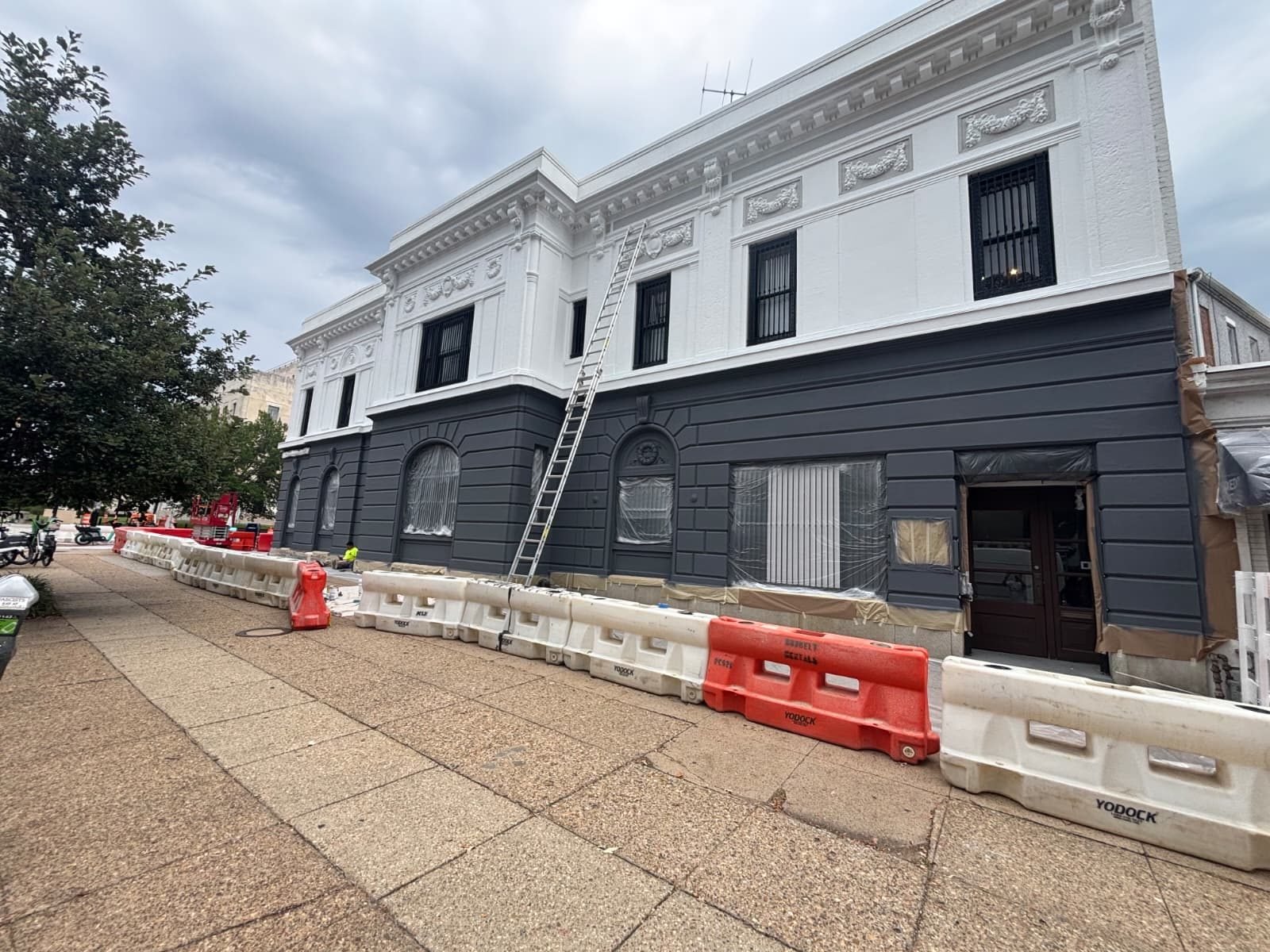
Our work includes offices, multifamily communities, schools, healthcare environments, retail spaces, hospitality properties, and other commercial facilities. We coordinate with property managers, facility teams, owners, developers, and general contractors.
Are you licensed and insured?
Yes. WL Painting Inc. is licensed and insured. If a project requires specific certificates, vendor documentation, or onboarding steps, identify them early so the administrative requirements can be coordinated with the field schedule.
Which services can be included in one scope?
Depending on project needs, the scope may include interior commercial painting, exterior coatings, commercial wallcovering removal or installation, drywall repair and surface preparation, pressure washing, maintenance painting, and specialty finishes. A site walkthrough helps separate required work from optional alternates.
Bid and scope questions
What should I include in a request for bid?
Include the site address, contact person, areas or quantities, desired completion window, current occupancy, access hours, known repairs, preferred products or colors, and relevant drawings or photographs. Also note whether the quote should include lifts, permits, protection, testing, or off-hours work. If details are still developing, say so; assumptions can then be identified instead of hidden.
Do you perform site walkthroughs?
A walkthrough is often the most reliable way to understand access, substrate condition, protection requirements, phasing, and crew logistics. Small or clearly documented scopes may be reviewed from complete photos and quantities, but field verification reduces surprises on more complex projects.
How can I compare commercial painting bids fairly?
Compare the included surfaces, preparation standard, number and type of coats, product system, access equipment, protection, cleanup, schedule assumptions, exclusions, and closeout requirements—not only the total. Our guide to scoping commercial painting bids provides a practical framework.
Can optional work be priced separately?
Yes. Clearly labeled alternates can help a property team compare coating systems, additional areas, repairs, or schedule options without losing sight of the base scope. Decide how alternates will be accepted before work begins so the authorization path remains clear.
Scheduling and occupied-building questions
Can you work in an occupied building?
Occupied work can be planned in phases with protection, daily cleanup, access control, and communication tailored to the property. The right approach depends on occupants, operating hours, ventilation, security, noise restrictions, and how quickly areas must return to service.
Can work be completed at night or on weekends?
Off-hours or phased scheduling may be considered when operations require it. Include allowed work windows, security procedures, elevator rules, loading access, and any quiet hours in the initial scope. These constraints affect crew sequencing and should not be introduced after pricing if they can be known earlier.
How long does a commercial painting project take?
Duration depends on quantity, preparation, repairs, coating cure times, access, crew size, occupancy, inspections, and weather for exterior work. A useful schedule identifies milestones and dependencies rather than promising a date before the field conditions and scope are understood.
How do you limit disruption to tenants, patients, students, or guests?
Useful controls can include smaller work zones, signage, protected pathways, advance notices, product and ventilation planning, daily cleanup, and coordination with the property’s representative. Sensitive environments may require additional site-specific rules, so those should be part of preconstruction planning.
Preparation and coating questions
What surface preparation is included?
Preparation is defined by the substrate and desired finish. It may include cleaning, scraping, sanding, filling, caulking, spot priming, drywall repair, or pressure washing. The proposal should state the preparation standard and distinguish normal preparation from concealed or extensive repairs.
Who selects the paint and colors?
The owner or authorized project representative typically approves colors and finish requirements. WL Painting can help evaluate product options for use, cleanability, sheen, substrate, exposure, and application conditions. Confirm final selections through a written approval or finish schedule before material ordering.
Do low-odor or lower-VOC options eliminate disruption?
These products can be useful in occupied settings, but they do not eliminate the need for ventilation, access controls, drying time, or site-specific safety procedures. Product selection should reflect both the operating environment and the performance needed from the finished surface.
Do you remove and install commercial wallcovering?
Yes. Our commercial wallcovering services can include removal, substrate evaluation and preparation, and installation. Existing wall conditions matter: removal can reveal adhesive residue, damaged drywall, or other repairs that should be addressed before a new finish is installed.
Is pressure washing always required before exterior painting?
Exterior surfaces must be appropriately clean and sound, but the cleaning method depends on the substrate and condition. Pressure washing may be part of preparation when suitable; fragile areas, active leaks, loose coatings, and drying conditions require care. The proposed system should explain how the substrate will be made ready.
Project control and closeout questions
Who should approve changes during the project?
Name one authorized representative and establish how discoveries or requested changes will be documented. A change should state the added or removed work, price and schedule effect, and approval before the changed work proceeds whenever practical.
What should happen at project closeout?
A useful closeout includes a walkthrough, documented punch items, cleanup confirmation, and delivery of any agreed product or color information. The property team should also identify who accepts the completed scope and how final access or tenant notices will be handled.
How do I start a conversation with WL Painting?
Use our request a bid form, call 301-665-7760, or email info@wlpaintinginc.com. You do not need a perfect scope to begin, but the more site and schedule context you provide, the more focused the next step can be.
Bring the scope, schedule, and access plan together
Tell us what the property needs, who will occupy it during the work, and when the result is needed. We can use that context to guide the next project conversation.